Black men share what it means to be a provider

Ask a Black man in Houston what it means to provide right now, and he will not hesitate. The answer might be different depending on who you ask, a homebuilder, a finance professional, or a youth baseball coach, but the weight behind it is the same.

Provision has always meant more than money. But in 2026, with job confidence in Houston at its lowest point in nearly 15 years, the gap between what men are expected to give and what the economy makes possible has never felt wider. 

If you like this article, please consider donating to support the Defender →

According to the 2026 Kinder Houston Area Survey from Rice University, confidence in local job prospects fell by nearly 30% in Harris County, the steepest single-year drop since the 1982 oil crisis. 

The traditional markers of provision, a steady paycheck, a mortgage, and a savings account, have never felt further out of reach. But across Houston’s neighborhoods, Black men are redefining what showing up looks like when the economy will not cooperate, for their children, their partners, their communities, and themselves. Black men are openly speaking about what it means to be a provider right now, without the lens of failure or heroism that too often frames these conversations.

“It has to be more than financial.”

Kevan Shelton, the Houston native who co-founded Park Street Homes and launched the Black Men Buy Houses initiative alongside his wife, Ayesha, knows what it costs a Black man to walk into a conversation about money. 

Kevan Shelton, the Houston native who co-founded Park Street Homes and launched the Black Men Buy Houses initiative alongside his wife, Ayesha, knows what it costs a Black man to walk into a conversation about money. 

He has hosted hundreds of those conversations across Houston and Atlanta, and he said the emotional weight men carry into them is rarely about numbers alone.

“Provision, the way it has been framed for us as men, has always been about putting other people’s needs above your own,” Shelton said. “But that framing has a cost. We have been given enough shoulders to carry that, but it does not mean we can sustain it without providing for ourselves first.”

Shelton sees provision as both deeply personal and communal. Homeownership is not just an asset; it is a vote, a stake in the neighborhood, a declaration of permanence. But he is also clear-eyed about what the moment requires.

“Provision has expanded for me,” Shelton said. “It is not just whether you can pay for things. It is whether you are standing as the first line of defense for your family and your larger community, and whether you are building something for the next generation.”

Rewriting the financial script

Kwesi Wilkerson, founder of Dream Core Capital and a financial literacy professional who works with Black men and families across Houston, has a particular way of describing the pressure Black men face right now. He calls it being boxed in.

“Being a financial provider is a corner we have been boxed into,” said Wilkerson. “But it is so much more than that. You cannot throw money at a situation and hope it all goes away, because you are still dealing with human beings.”

Wilkerson grew up watching two men, his stepfather and his biological father, navigate the role of provider from very different circumstances. Both were laid off during the 2008 financial crisis. Both, he said, modeled something that money could not measure, emotional presence. His biological father, in particular, emphasized physical embrace, open expression, and consistency across the court-ordered visits they shared.

“He modeled masculinity through his emotional expression,” Wilkerson said. “He showed me it was okay to embrace, okay to cry, okay to emote. That was his strength.”

In his work today, Wilkerson sees a generation of Black men who are starving not just for financial tools, but for spaces to be human. He is blunt about what that costs families and communities when those spaces do not exist.

“We have convinced ourselves that we can operate at a subhuman standard to look cool, to attract women, to be what we believe is a good father,” he said. “And it is putting us in a box. Where do we even go to have these honest conversations? I do not know. But that is part of the problem.”

Showing up is the work

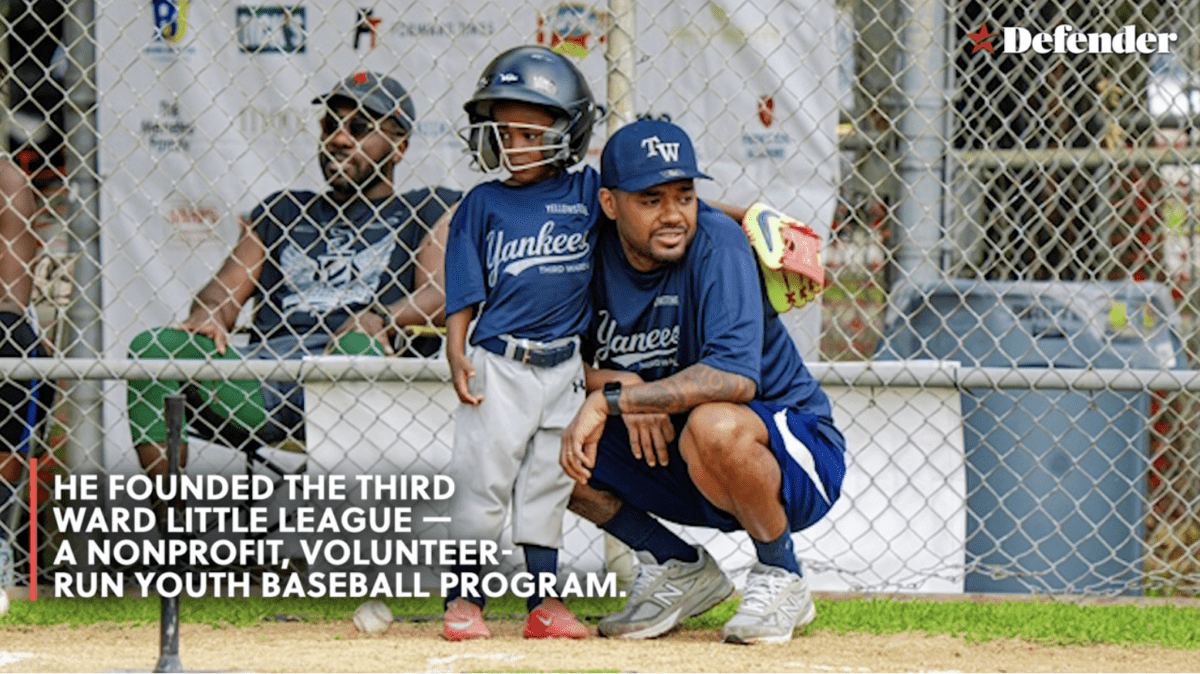
Alvin Johnson IV wears several hats. He is the regional president of Texas First Bank’s Houston operations, a husband, and a father of two boys. And he is the founder and president of Third Ward Little League, a nonprofit, volunteer-run youth baseball program he and a board of 13 community members built from the ground up because the neighborhood lacked one.

Building the league was an act of alignment, matching his values as a man with his responsibility to his community. Johnson said he was intentional about finding an employer that shares those values, one that understands when he needs to step away from work because his family comes first. That same principle runs through the league. No one on the board receives compensation. Coaches, parents, and community members all volunteer. The kids, ages 4 to 6, get a space to just be kids, in their own neighborhood, surrounded by people who choose to show up for them.

“Provision, for me, is preparing your family for all types of situations,” Johnson said. “And to do that, you have to be present, you have to be consistent, you have to be available. You have to have the capacity to truly be engaged.”

“There is a narrative of Black men not being present, not showing up, not caring about the people around them. And I think that is a false narrative. Black men are dynamic, nurturing, and loving. We provide, we teach, we show up in ways that never get recognized.” – ALVIN JOHNSON IV

Johnson was shaped by the men who came before him. His father coached his Little League team. His grandfather did the same. The league is, in that sense, an inheritance passed forward.

“Those seeds were planted in me because I saw my dad do it,” Johnson said. “Now we are trying to plant the same seeds in these kids.”

He called alignment among work, family, and community nonnegotiable. And when asked what he wants the young men to understand about what it means to show up, he said it’s not about money. It is not about influence. 

“It is about your child seeing you show up for them and have the intentionality to be engaged,” he said. “That void is going to be filled by some influence, somebody, something. It is much more beneficial for the child when it is filled by the father.”

Original article written by Laura Onyeneho and published on June 19, 2026.
Park Street Homes expands urban infill homebuilding model

Park Street blends standardized construction controls with reflective design for established neighborhoods and scattered lots

Article Summary

Park Street Homes is preparing a capital raise and assessing roughly 15 additional metros for expansion. Its approach combines repeatable production processes with neighborhood-specific design and relationship-building that affect entitlements, land access, and sales velocity.  AI Summary

Homebuilding scale today conjures satellite GPS imagery or drone-generated aerials.

It shows up in thousands of lots under control, sprawling master-planned communities, national purchasing agreements, and dozens of operating divisions, with enough annual closings and local metro-area clout to drive fixed costs down across an enormous production machine.

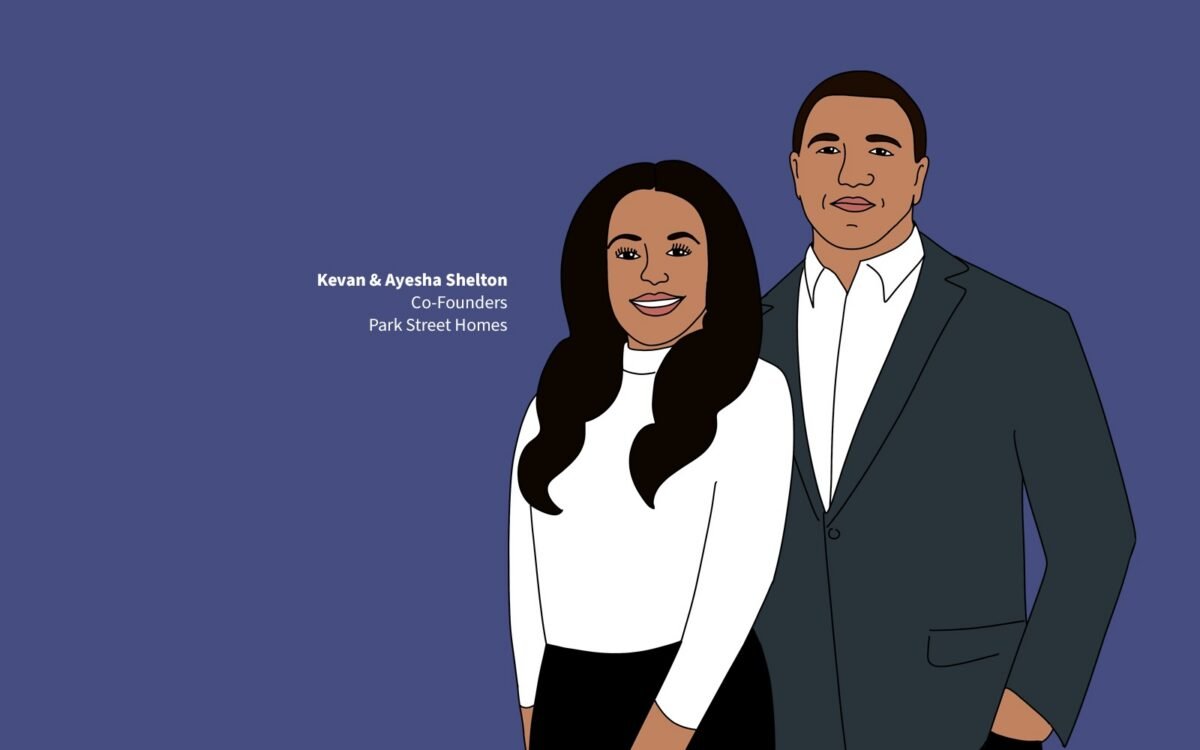
Kevan and Ayesha Shelton are building toward another definition.

At Park Street Homes, their bet is that production-homebuilding discipline can create scale in places where conventional production builders have historically found it difficult to operate: established urban neighborhoods where lots are fragmented, infrastructure is old, architecture carries history and the people already living there have good reason to care deeply about what gets built next door.

The Sheltons have spent the past decade proving the model in Houston and, increasingly, beyond it. Now, despite an unforgiving homebuilding environment of fragile demand, strained affordability and expensive capital, they are preparing to push harder.

Park Street has identified roughly 15 additional urban markets as potential expansion targets and is raising capital to accelerate that growth. The ambition is significant, but the unit of expansion remains deliberately small. Neighborhood by neighborhood. City by city.

“As we’ve grown and done more, I think we found the thread of a sweater,” Shelton told me during a recent one-to-one conversation. “We realize that our model is such a needed thing in almost every urban core around the country.”

That makes Park Street Homes the third company in HousingWire TBD’s Built For This series to arrive at a similar destination from a sharply contrasting starting point.

National Home Corp. is using a tightly disciplined, land-light production model to continue building attainable homes and to grow through a difficult market. StyleCraft Builders CEO Doug French is pushing his organization back to the operational fundamentals (i.e., schedules, purchase orders, variances, customer delivery, and continuous learning) that matter most when less favorable market conditions expose more mistakes.

Park Street’s competitive moat begins elsewhere.

Its operating thesis is that overlooked neighborhoods can become a platform for growth if a builder brings production discipline rather than treating them like interchangeable subdivisions.

Production building, turned inside out

When we first profiled Park Street Homes last year, the company’s model stood out because it combined two capabilities that are rarely used together and are often thought to cancel each other out.

The first came from production homebuilding: standardized processes, purchasing discipline, repeatability, construction controls and an understanding that profitability ultimately depends on turning individual houses into a functioning production system.

The second was intensely local.

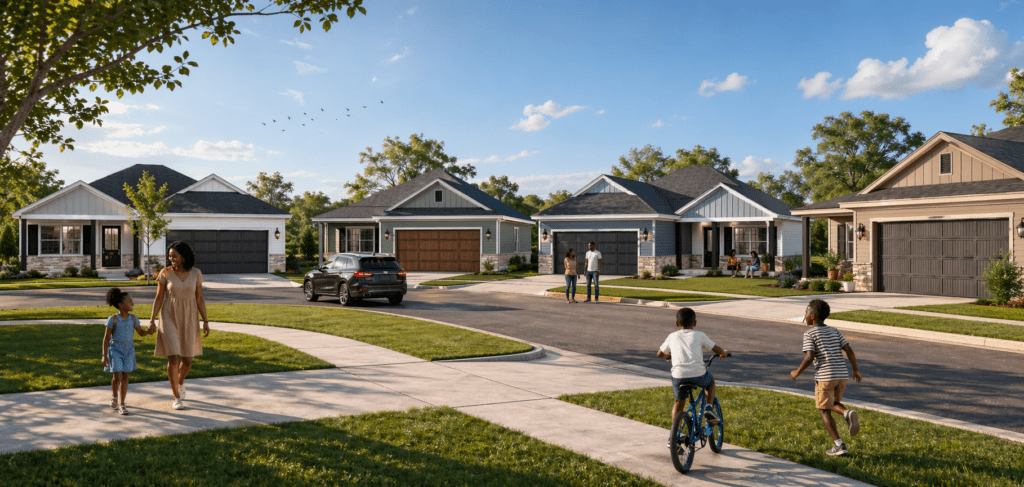
Park Street calls its approach “reflective design.” Rather than dropping a standardized suburban streetscape into an established neighborhood, its team studies the existing architecture and history, then adapts its product accordingly.

The underlying, inside-the-walls house can repeat, with each floorplan learning from the one before and gaining first-time-right velocity. Meanwhile, its curb appeal to the neighborhood evolves and channels the local, historical vibe.

“We can take our same plans, kind of change the face to the neighborhood culture of where we are, but the core tenets of the plan work,” Shelton said. “The core tenets of the philosophy around the plan work.”

Why? Because the economics of urban infill differ sharply from the conventional production model.

A large builder seeking several hundred contiguous lots may have little interest in a collection of smaller parcels scattered throughout an existing neighborhood. Park Street can see precisely those conditions as an opening.

The competitive advantage comes partly from land, but also from knowing how to operate where development requires a different kind of permission.

In an established neighborhood, the builder is not creating community from scratch. It is entering one.

Trust as operating infrastructure

That changes what scale means. Park Street cannot simply replicate Houston in Birmingham, Dallas, or the next dozen markets on its list. The operating system has to travel, while the company’s relationship to the place remains local.

The center of the growth strategy sits here.

“Every neighborhood ultimately has many of the same needs, features, and cultural aspects,” Shelton said. The opportunity, as he sees it, is to overlay a repeatable operating model across different landscapes while preserving enough local knowledge and sensitivity so each neighborhood can recognize itself in what gets built.

Getting that right has business consequences. Community trust can affect access to land, municipal relationships, entitlements, nonprofit partnerships, buyer acceptance, and ultimately the speed at which a builder can turn opportunity into closings. In Park Street’s model, relationships are not separate from the production system. They are part of it.

In this way, trust becomes infrastructure, the “public works system” that powers each neighborhood’s evolution.

It also complicates the conventional homebuilding notion that scale primarily means getting bigger. Park Street needs repetition, purchasing power, capital efficiency and standardized processes, just as any production builder does, but it also needs the intimacy to understand why one block differs from the next.

The Sheltons’ challenge is to scale both at once.

Affordability meets them where they are

The current market has added urgency to that work.

“What we found ourselves, especially in the affordable housing space, it seems like the market met us where we were,” Shelton said. “We were focused on affordability, and then everybody now is focused on affordability.”

That does not make selling affordable homes easy. On the contrary.

“In a market like this, demand is what really is more fragile,” Shelton said. “I think in 2022 you could throw a dart and sell a house, and now you have to do a lot more convincing.”

Park Street, however, enters this period with an unusual advantage. Because of the way it acquires land and structures affordable projects, Shelton says the company can establish the economics for some homes well before delivery.

“We’re essentially years out ahead of prices set on homes,” he said. “We know exactly what we’re going to charge for a home. We design for profitability when we initially take the land on.”

That can give the team visibility into projects with a 12- to 24-month ramp-up, whose economics were established before the house reaches the buyer. In a volatile market, as we’ve seen in other housing and economic downturns, visibility itself is valuable.

It gives Park Street time to work with municipalities and community partners, understand prospective buyers and create a clearer connection between the housing it intends to produce and the households the product is supposed to serve.

That gets back to a central feature of the Park Street model: the customer is not someone the company hopes will eventually wander into a sales center.

The customer is part of the business problem from the beginning.

A different route to scale

Park Street’s expansion plans now put that proposition under a more demanding test.

The company is working with major investment bank on a capital raise to support expansion. Shelton describes the strategy as “two-handed”: pairing financial capital with a potential strategic homebuilding partner that already operates in some of the markets Park Street aims to enter.

The structure itself suggests something about the next phase. Park Street need not become a conventional national production builder to benefit from the capabilities of one. Nor does a larger builder necessarily have to replicate Park Street’s neighborhood expertise internally if a partnership can provide access to it.

That opens another way to think about scale in an industry increasingly preoccupied with consolidation.

National homebuilders have undeniable advantages in purchasing, capital, technology, and overhead leverage. Yet their size also sets a threshold below which many opportunities simply are not worth pursuing.

Park Street is building a business in part from what falls below that threshold.

A fragmented collection of lots can be a nuisance to one company and a pipeline for another. A neighborhood that requires years of relationship-building can look inefficient under one operating model and defensible under another.

Scale, in other words, depends on what you are trying to repeat.

The thing that cannot get lost

That may be the more difficult leadership problem facing Kevan and Ayesha Shelton now. The company has found something it believes it can fully port into more than a dozen new metros. Its production processes can repeat. Its plans can repeat. Its approach to land, affordability and partnerships can be applied in additional cities.

But the business works because some things do not repeat mechanically.

Neighborhood history is specific. Trust is specific. Relationships with city leaders, residents, and community organizations are specific. The architectural cues that make a new home feel as though it belongs on a block are specific.

The next stage of Park Street Homes will depend on whether its leaders can rigorously distinguish between the parts of the business that should be standardized and those that should never be standardized.

That is a different leadership challenge from those we encountered at National Home Corp. and StyleCraft Builders, but the family resemblance is becoming clearer.

None of these companies can lower mortgage rates. None controls the broader economy. None can rely on a sudden restoration of easy affordability or abundant inexpensive capital.

What their leaders can do is get more precise about the advantage their businesses possess. Who they are. Who they want to be.

For National Home Corp., that means a disciplined operating playbook built backward from an attainable home price point.

For StyleCraft, it means making basic execution, i.e. building on time, controlling variances, finishing the house properly, and learning from repetition, an organizational standard.

For Park Street, it means combining production capacity with something far harder to mass-produce: knowledge of place, access to overlooked land, and trust within communities where housing investment has too often arrived without sufficient regard for the people already there.

Shelton believes that the combination goes hand in hand and will travel together felicitously.

“We’ve identified … about 15 additional markets other than the markets that we’re in that we have on our list to expand to,” he said. “It is on that neighborhood-by-neighborhood, kind of city-by-city scale.”

That is the growth opportunity and the test. Park Street has to grow without becoming less local, more standardized without becoming generic, and more efficient without stripping away the relationships that gave the model its opening in the first place.

That is the conversation Shelton will bring to the HousingWire Homebuilder Summit in Dallas, Oct. 19–21.

And it adds another answer to the question running through our Built For This series: What can a homebuilding business do when the market itself offers little outside help? Start by knowing what you can do that others cannot, or will not. Then figure out how to do more of it.

Originally published September 11, 2026, at 1:41 p.m. by John McManus for The Builder’s Daily | Leadership, HousingWire.

Nonprofit teams with developer on 23-home project in historic Houston neighborhood

A nonprofit and a for-profit developer have teamed up to create affordable homes in one of Houston’s oldest historically Black neighborhoods.

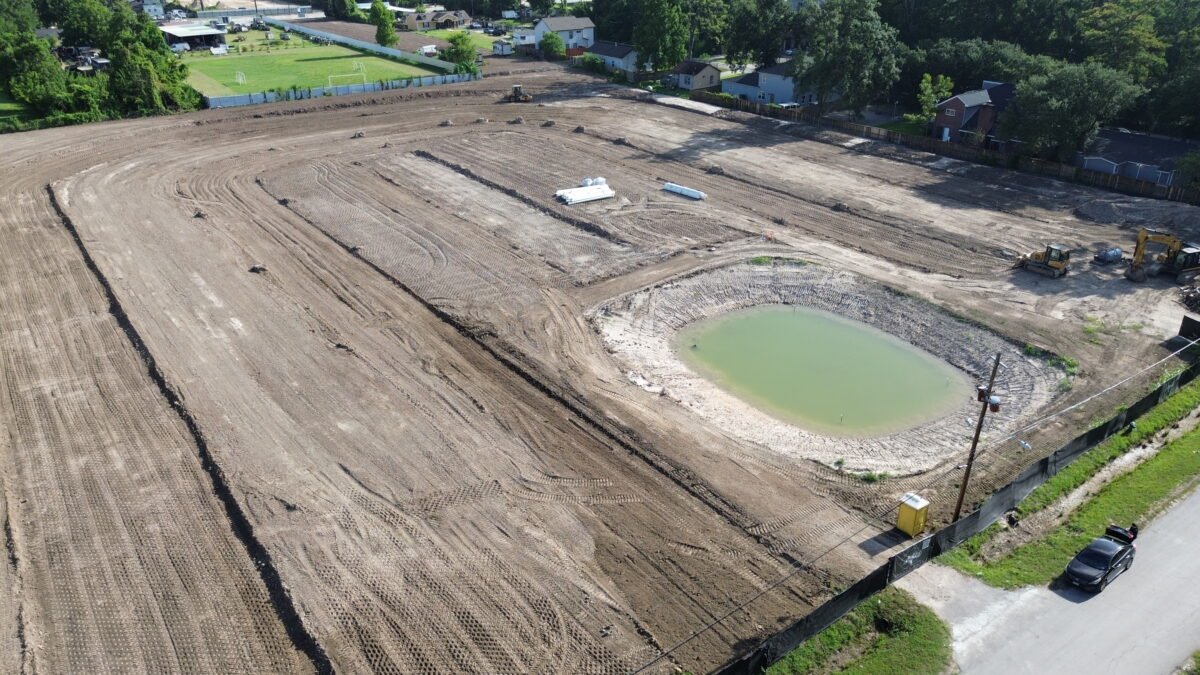
Houston-based developer Park Street Homes and the Houston Area Urban League have started work on a 5-acre development in Acres Homes called Legacy Oaks. The project will offer 23 homes and space for a community center to serve both Legacy Oaks residents and the broader Acres Homes community.

The development broke ground on Juneteenth 2026 at 1620 Bland St., near West Little York, and the first eight homes are slated for delivery toward the end of the year. The homes range from 1,300- to 1,600-square-foot properties, with lots sized in the 5,000-square-foot range. Prices start in the mid-$200s, with entry-level homes around $275,000. The developers are offering a $5,000 credit for those in police, fire or education professions.

In addition, the developers are partnering with the city of Houston, which offers a downpayment assistance program. Under the Homebuyer Assistance Program, first-time homebuyers with household income at or below 80% of the area median income can receive up to $75,000 for the purchase of a home taxed by the city of Houston. The no-interest loan is secured by a lien and is forgiven if the buyer lives in the home for five years.

Park Street Homes is serving as the general contractor for the project.

The project was made possible due to the donation of the land, which was gifted by community members to the Houston Area Urban League in 2007, according to Judson Robinson, president of the nonprofit.

“They donated that property to the Urban League with the promise that we would develop the property as something that would be beneficial to the community, especially the youth and the seniors in the area,” Robinson said.

Legacy Oaks, a 23-home development in Acres Homes, broke ground this summer and is expected to provide affordable homes and a new community center. The property was provided by the Houston Area Urban League.
COURTESY LEGACY OAKS

The nonprofit owned the land for nearly 20 years, keeping up with maintenance and paying taxes, waiting for a project opportunity that aligned with its vision for the property. The growth and development of Acres Homes in recent years is part of what made the project possible, Robinson said.

“Jobs and industry has moved back into the community. The infrastructure of streets and utilities is improved. The people that are working in that neighborhood has increased, so the opportunity for rooftops and the complementary businesses that typically are associated with that has changed,” Robinson said.

On the other hand, securing an affordable home in the area has become more of a challenge for people in the community. The project aims to prevent long-term residents from being priced out of Acres Homes by providing affordable high-quality options.

“We’re trying to make these homes as such that they are within the price range of a plumber or electrician or a school teacher,” Robinson said.

By spring 2027, the first families could be moving in, said Kevan Shelton, CEO of Park Street Homes.

Park Street Homes uses a “reflective design” process, taking cultural history of the area and community demographics into account when making architectural choices.

“This project is so important because its one-of-one in an existing community where those streets were laid out over 100 years ago,” Shelton said. “A 100-year-old organization (the Urban League) has decided to honor the legacy of not only the neighborhood and what it was but (also) what the future could be through development.”

Legacy Oaks also will include a community center run by the Urban League, the area’s first in more than 60 years. The size of the center hasn’t been finalized, but it will include space for workforce development and career pathway training, technology and artificial intelligence training, after-school enrichment for kids, and college and career planning. Services for seniors are expected to include benefits assistance, financial and technology education, and wellness activities.

Robinson said the new center will allow the community to have wider access to its programs and services while serving as an economic mobility engine for the area.

“We think this model and concept is something that many more developers need to have the mentality of,” Robinson said.

Shelton said the center was always part of the vision for the development.

“That’s a credit to the Urban League’s vision,” Shelton said. “When we can to the table, they had a very clear vision on what they wanted to achieve, and what we’re able to do is layer on what we do from a residential development standpoint: mapping out the infrastructure and the pricing and the architectural design.”

The Urban League hopes these types of nonprofit-led developments — providing affordable housing and economic development for communities — become more common.

“The people that donated that property to us, this is going to be part of their legacy,” Robinson said. “I’m hoping that people read this and say, ‘You know, that’s not a bad circle of life.'”

The Urban League’s annual gala is scheduled for Dec. 12. It will use those proceeds to pay for resources and the workforce it needs to operate.

Original article published By Janet Miranda – Reporter, Houston Business Journal Aug 20, 2026

error: Content is protected !!