Black men share what it means to be a provider


Ask a Black man in Houston what it means to provide right now, and he will not hesitate. The answer might be different depending on who you ask, a homebuilder, a finance professional, or a youth baseball coach, but the weight behind it is the same.

Provision has always meant more than money. But in 2026, with job confidence in Houston at its lowest point in nearly 15 years, the gap between what men are expected to give and what the economy makes possible has never felt wider. 

If you like this article, please consider donating to support the Defender →

According to the 2026 Kinder Houston Area Survey from Rice University, confidence in local job prospects fell by nearly 30% in Harris County, the steepest single-year drop since the 1982 oil crisis. 

The traditional markers of provision, a steady paycheck, a mortgage, and a savings account, have never felt further out of reach. But across Houston’s neighborhoods, Black men are redefining what showing up looks like when the economy will not cooperate, for their children, their partners, their communities, and themselves. Black men are openly speaking about what it means to be a provider right now, without the lens of failure or heroism that too often frames these conversations.

“It has to be more than financial.”

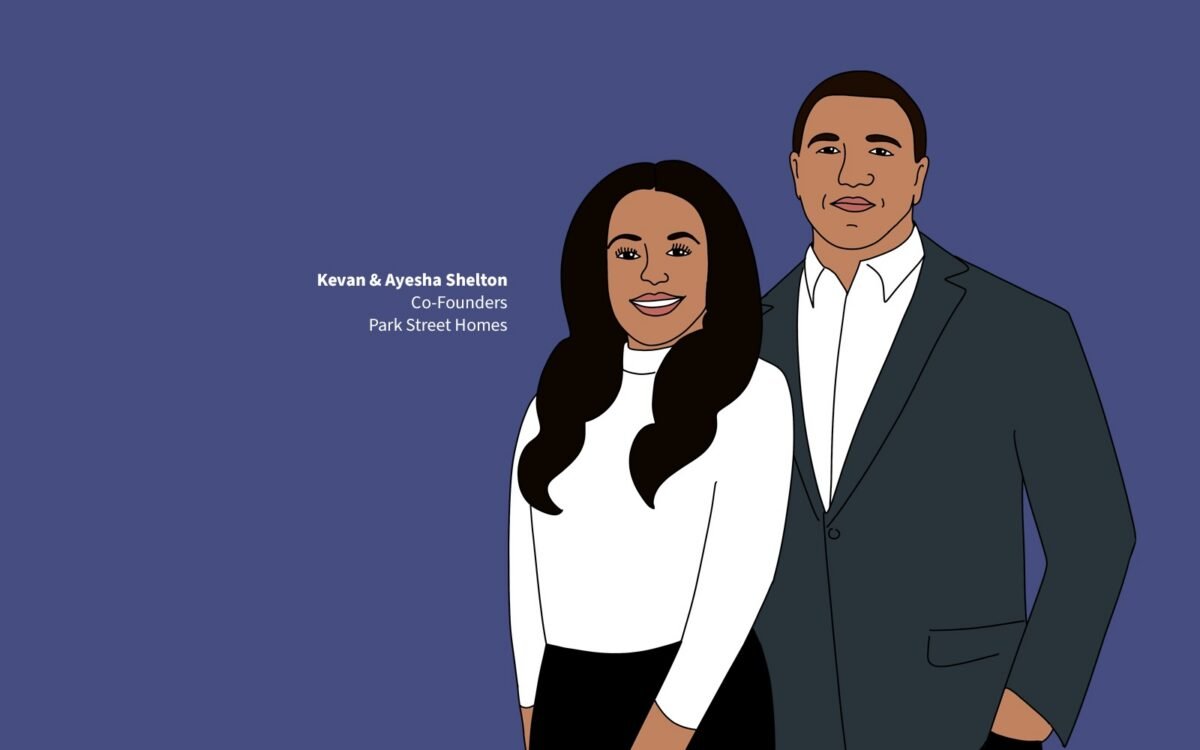
Kevan Shelton, the Houston native who co-founded Park Street Homes and launched the Black Men Buy Houses initiative alongside his wife, Ayesha, knows what it costs a Black man to walk into a conversation about money. 

Kevan Shelton, the Houston native who co-founded Park Street Homes and launched the Black Men Buy Houses initiative alongside his wife, Ayesha, knows what it costs a Black man to walk into a conversation about money. 

He has hosted hundreds of those conversations across Houston and Atlanta, and he said the emotional weight men carry into them is rarely about numbers alone.

“Provision, the way it has been framed for us as men, has always been about putting other people’s needs above your own,” Shelton said. “But that framing has a cost. We have been given enough shoulders to carry that, but it does not mean we can sustain it without providing for ourselves first.”

Shelton sees provision as both deeply personal and communal. Homeownership is not just an asset; it is a vote, a stake in the neighborhood, a declaration of permanence. But he is also clear-eyed about what the moment requires.

“Provision has expanded for me,” Shelton said. “It is not just whether you can pay for things. It is whether you are standing as the first line of defense for your family and your larger community, and whether you are building something for the next generation.”

Rewriting the financial script

Kwesi Wilkerson, founder of Dream Core Capital and a financial literacy professional who works with Black men and families across Houston, has a particular way of describing the pressure Black men face right now. He calls it being boxed in.

“Being a financial provider is a corner we have been boxed into,” said Wilkerson. “But it is so much more than that. You cannot throw money at a situation and hope it all goes away, because you are still dealing with human beings.”

Wilkerson grew up watching two men, his stepfather and his biological father, navigate the role of provider from very different circumstances. Both were laid off during the 2008 financial crisis. Both, he said, modeled something that money could not measure, emotional presence. His biological father, in particular, emphasized physical embrace, open expression, and consistency across the court-ordered visits they shared.

“He modeled masculinity through his emotional expression,” Wilkerson said. “He showed me it was okay to embrace, okay to cry, okay to emote. That was his strength.”

In his work today, Wilkerson sees a generation of Black men who are starving not just for financial tools, but for spaces to be human. He is blunt about what that costs families and communities when those spaces do not exist.

“We have convinced ourselves that we can operate at a subhuman standard to look cool, to attract women, to be what we believe is a good father,” he said. “And it is putting us in a box. Where do we even go to have these honest conversations? I do not know. But that is part of the problem.”

Showing up is the work

Alvin Johnson IV wears several hats. He is the regional president of Texas First Bank’s Houston operations, a husband, and a father of two boys. And he is the founder and president of Third Ward Little League, a nonprofit, volunteer-run youth baseball program he and a board of 13 community members built from the ground up because the neighborhood lacked one.

Building the league was an act of alignment, matching his values as a man with his responsibility to his community. Johnson said he was intentional about finding an employer that shares those values, one that understands when he needs to step away from work because his family comes first. That same principle runs through the league. No one on the board receives compensation. Coaches, parents, and community members all volunteer. The kids, ages 4 to 6, get a space to just be kids, in their own neighborhood, surrounded by people who choose to show up for them.

“Provision, for me, is preparing your family for all types of situations,” Johnson said. “And to do that, you have to be present, you have to be consistent, you have to be available. You have to have the capacity to truly be engaged.”

“There is a narrative of Black men not being present, not showing up, not caring about the people around them. And I think that is a false narrative. Black men are dynamic, nurturing, and loving. We provide, we teach, we show up in ways that never get recognized.” – ALVIN JOHNSON IV

Johnson was shaped by the men who came before him. His father coached his Little League team. His grandfather did the same. The league is, in that sense, an inheritance passed forward.

“Those seeds were planted in me because I saw my dad do it,” Johnson said. “Now we are trying to plant the same seeds in these kids.”

He called alignment among work, family, and community nonnegotiable. And when asked what he wants the young men to understand about what it means to show up, he said it’s not about money. It is not about influence. 

“It is about your child seeing you show up for them and have the intentionality to be engaged,” he said. “That void is going to be filled by some influence, somebody, something. It is much more beneficial for the child when it is filled by the father.”

Original article written by Laura Onyeneho and published on June 19, 2026.
Park Street Homes expands urban infill homebuilding model

Park Street blends standardized construction controls with reflective design for established neighborhoods and scattered lots

Article Summary

Park Street Homes is preparing a capital raise and assessing roughly 15 additional metros for expansion. Its approach combines repeatable production processes with neighborhood-specific design and relationship-building that affect entitlements, land access, and sales velocity.  AI Summary

Homebuilding scale today conjures satellite GPS imagery or drone-generated aerials.

It shows up in thousands of lots under control, sprawling master-planned communities, national purchasing agreements, and dozens of operating divisions, with enough annual closings and local metro-area clout to drive fixed costs down across an enormous production machine.

Kevan and Ayesha Shelton are building toward another definition.

At Park Street Homes, their bet is that production-homebuilding discipline can create scale in places where conventional production builders have historically found it difficult to operate: established urban neighborhoods where lots are fragmented, infrastructure is old, architecture carries history and the people already living there have good reason to care deeply about what gets built next door.

The Sheltons have spent the past decade proving the model in Houston and, increasingly, beyond it. Now, despite an unforgiving homebuilding environment of fragile demand, strained affordability and expensive capital, they are preparing to push harder.

Park Street has identified roughly 15 additional urban markets as potential expansion targets and is raising capital to accelerate that growth. The ambition is significant, but the unit of expansion remains deliberately small. Neighborhood by neighborhood. City by city.

“As we’ve grown and done more, I think we found the thread of a sweater,” Shelton told me during a recent one-to-one conversation. “We realize that our model is such a needed thing in almost every urban core around the country.”

That makes Park Street Homes the third company in HousingWire TBD’s Built For This series to arrive at a similar destination from a sharply contrasting starting point.

National Home Corp. is using a tightly disciplined, land-light production model to continue building attainable homes and to grow through a difficult market. StyleCraft Builders CEO Doug French is pushing his organization back to the operational fundamentals (i.e., schedules, purchase orders, variances, customer delivery, and continuous learning) that matter most when less favorable market conditions expose more mistakes.

Park Street’s competitive moat begins elsewhere.

Its operating thesis is that overlooked neighborhoods can become a platform for growth if a builder brings production discipline rather than treating them like interchangeable subdivisions.

Production building, turned inside out

When we first profiled Park Street Homes last year, the company’s model stood out because it combined two capabilities that are rarely used together and are often thought to cancel each other out.

The first came from production homebuilding: standardized processes, purchasing discipline, repeatability, construction controls and an understanding that profitability ultimately depends on turning individual houses into a functioning production system.

The second was intensely local.

Park Street calls its approach “reflective design.” Rather than dropping a standardized suburban streetscape into an established neighborhood, its team studies the existing architecture and history, then adapts its product accordingly.

The underlying, inside-the-walls house can repeat, with each floorplan learning from the one before and gaining first-time-right velocity. Meanwhile, its curb appeal to the neighborhood evolves and channels the local, historical vibe.

“We can take our same plans, kind of change the face to the neighborhood culture of where we are, but the core tenets of the plan work,” Shelton said. “The core tenets of the philosophy around the plan work.”

Why? Because the economics of urban infill differ sharply from the conventional production model.

A large builder seeking several hundred contiguous lots may have little interest in a collection of smaller parcels scattered throughout an existing neighborhood. Park Street can see precisely those conditions as an opening.

The competitive advantage comes partly from land, but also from knowing how to operate where development requires a different kind of permission.

In an established neighborhood, the builder is not creating community from scratch. It is entering one.

Trust as operating infrastructure

That changes what scale means. Park Street cannot simply replicate Houston in Birmingham, Dallas, or the next dozen markets on its list. The operating system has to travel, while the company’s relationship to the place remains local.

The center of the growth strategy sits here.

“Every neighborhood ultimately has many of the same needs, features, and cultural aspects,” Shelton said. The opportunity, as he sees it, is to overlay a repeatable operating model across different landscapes while preserving enough local knowledge and sensitivity so each neighborhood can recognize itself in what gets built.

Getting that right has business consequences. Community trust can affect access to land, municipal relationships, entitlements, nonprofit partnerships, buyer acceptance, and ultimately the speed at which a builder can turn opportunity into closings. In Park Street’s model, relationships are not separate from the production system. They are part of it.

In this way, trust becomes infrastructure, the “public works system” that powers each neighborhood’s evolution.

It also complicates the conventional homebuilding notion that scale primarily means getting bigger. Park Street needs repetition, purchasing power, capital efficiency and standardized processes, just as any production builder does, but it also needs the intimacy to understand why one block differs from the next.

The Sheltons’ challenge is to scale both at once.

Affordability meets them where they are

The current market has added urgency to that work.

“What we found ourselves, especially in the affordable housing space, it seems like the market met us where we were,” Shelton said. “We were focused on affordability, and then everybody now is focused on affordability.”

That does not make selling affordable homes easy. On the contrary.

“In a market like this, demand is what really is more fragile,” Shelton said. “I think in 2022 you could throw a dart and sell a house, and now you have to do a lot more convincing.”

Park Street, however, enters this period with an unusual advantage. Because of the way it acquires land and structures affordable projects, Shelton says the company can establish the economics for some homes well before delivery.

“We’re essentially years out ahead of prices set on homes,” he said. “We know exactly what we’re going to charge for a home. We design for profitability when we initially take the land on.”

That can give the team visibility into projects with a 12- to 24-month ramp-up, whose economics were established before the house reaches the buyer. In a volatile market, as we’ve seen in other housing and economic downturns, visibility itself is valuable.

It gives Park Street time to work with municipalities and community partners, understand prospective buyers and create a clearer connection between the housing it intends to produce and the households the product is supposed to serve.

That gets back to a central feature of the Park Street model: the customer is not someone the company hopes will eventually wander into a sales center.

The customer is part of the business problem from the beginning.

A different route to scale

Park Street’s expansion plans now put that proposition under a more demanding test.

The company is working with major investment bank on a capital raise to support expansion. Shelton describes the strategy as “two-handed”: pairing financial capital with a potential strategic homebuilding partner that already operates in some of the markets Park Street aims to enter.

The structure itself suggests something about the next phase. Park Street need not become a conventional national production builder to benefit from the capabilities of one. Nor does a larger builder necessarily have to replicate Park Street’s neighborhood expertise internally if a partnership can provide access to it.

That opens another way to think about scale in an industry increasingly preoccupied with consolidation.

National homebuilders have undeniable advantages in purchasing, capital, technology, and overhead leverage. Yet their size also sets a threshold below which many opportunities simply are not worth pursuing.

Park Street is building a business in part from what falls below that threshold.

A fragmented collection of lots can be a nuisance to one company and a pipeline for another. A neighborhood that requires years of relationship-building can look inefficient under one operating model and defensible under another.

Scale, in other words, depends on what you are trying to repeat.

The thing that cannot get lost

That may be the more difficult leadership problem facing Kevan and Ayesha Shelton now. The company has found something it believes it can fully port into more than a dozen new metros. Its production processes can repeat. Its plans can repeat. Its approach to land, affordability and partnerships can be applied in additional cities.

But the business works because some things do not repeat mechanically.

Neighborhood history is specific. Trust is specific. Relationships with city leaders, residents, and community organizations are specific. The architectural cues that make a new home feel as though it belongs on a block are specific.

The next stage of Park Street Homes will depend on whether its leaders can rigorously distinguish between the parts of the business that should be standardized and those that should never be standardized.

That is a different leadership challenge from those we encountered at National Home Corp. and StyleCraft Builders, but the family resemblance is becoming clearer.

None of these companies can lower mortgage rates. None controls the broader economy. None can rely on a sudden restoration of easy affordability or abundant inexpensive capital.

What their leaders can do is get more precise about the advantage their businesses possess. Who they are. Who they want to be.

For National Home Corp., that means a disciplined operating playbook built backward from an attainable home price point.

For StyleCraft, it means making basic execution, i.e. building on time, controlling variances, finishing the house properly, and learning from repetition, an organizational standard.

For Park Street, it means combining production capacity with something far harder to mass-produce: knowledge of place, access to overlooked land, and trust within communities where housing investment has too often arrived without sufficient regard for the people already there.

Shelton believes that the combination goes hand in hand and will travel together felicitously.

“We’ve identified … about 15 additional markets other than the markets that we’re in that we have on our list to expand to,” he said. “It is on that neighborhood-by-neighborhood, kind of city-by-city scale.”

That is the growth opportunity and the test. Park Street has to grow without becoming less local, more standardized without becoming generic, and more efficient without stripping away the relationships that gave the model its opening in the first place.

That is the conversation Shelton will bring to the HousingWire Homebuilder Summit in Dallas, Oct. 19–21.

And it adds another answer to the question running through our Built For This series: What can a homebuilding business do when the market itself offers little outside help? Start by knowing what you can do that others cannot, or will not. Then figure out how to do more of it.

Originally published September 11, 2026, at 1:41 p.m. by John McManus for The Builder’s Daily | Leadership, HousingWire.

Nonprofit teams with developer on 23-home project in historic Houston neighborhood

A nonprofit and a for-profit developer have teamed up to create affordable homes in one of Houston’s oldest historically Black neighborhoods.

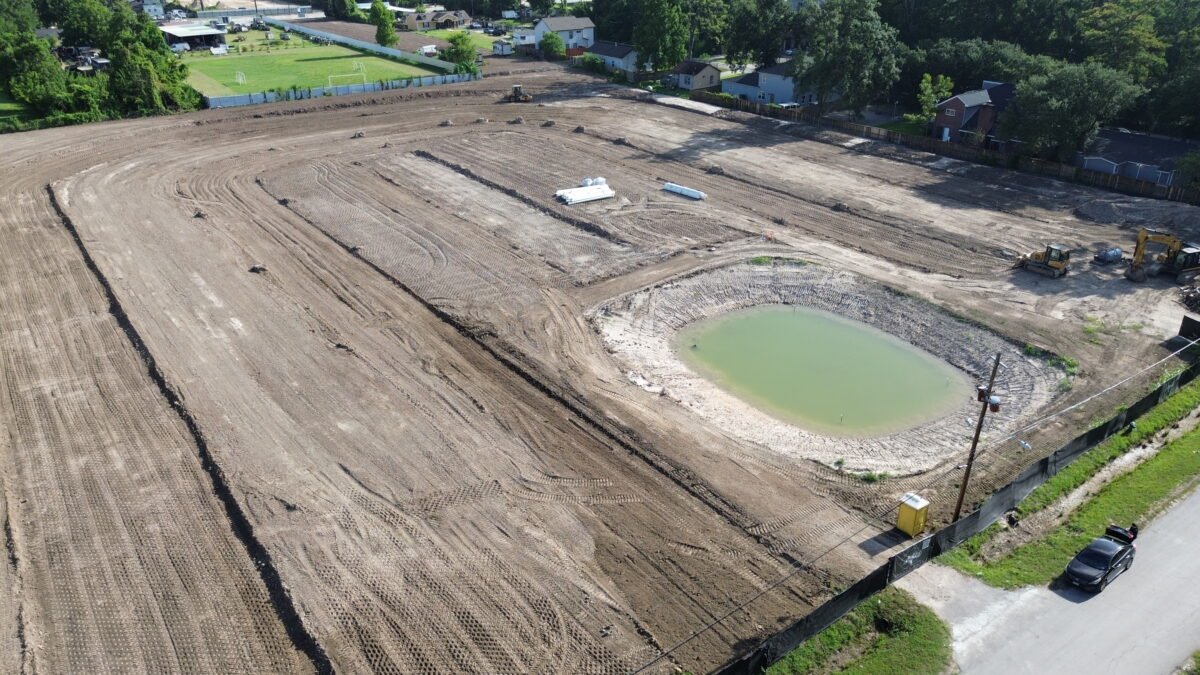
Houston-based developer Park Street Homes and the Houston Area Urban League have started work on a 5-acre development in Acres Homes called Legacy Oaks. The project will offer 23 homes and space for a community center to serve both Legacy Oaks residents and the broader Acres Homes community.

The development broke ground on Juneteenth 2026 at 1620 Bland St., near West Little York, and the first eight homes are slated for delivery toward the end of the year. The homes range from 1,300- to 1,600-square-foot properties, with lots sized in the 5,000-square-foot range. Prices start in the mid-$200s, with entry-level homes around $275,000. The developers are offering a $5,000 credit for those in police, fire or education professions.

In addition, the developers are partnering with the city of Houston, which offers a downpayment assistance program. Under the Homebuyer Assistance Program, first-time homebuyers with household income at or below 80% of the area median income can receive up to $75,000 for the purchase of a home taxed by the city of Houston. The no-interest loan is secured by a lien and is forgiven if the buyer lives in the home for five years.

Park Street Homes is serving as the general contractor for the project.

The project was made possible due to the donation of the land, which was gifted by community members to the Houston Area Urban League in 2007, according to Judson Robinson, president of the nonprofit.

“They donated that property to the Urban League with the promise that we would develop the property as something that would be beneficial to the community, especially the youth and the seniors in the area,” Robinson said.

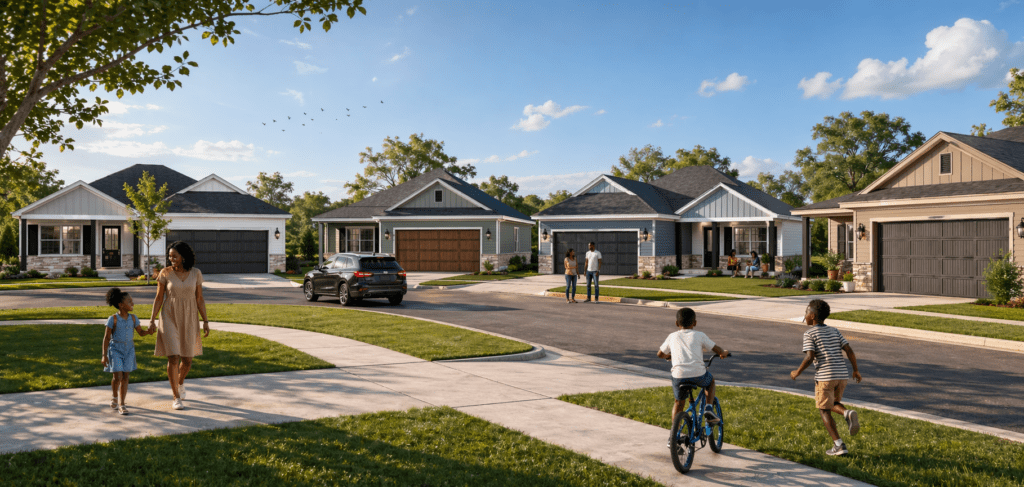
Legacy Oaks, a 23-home development in Acres Homes, broke ground this summer and is expected to provide affordable homes and a new community center. The property was provided by the Houston Area Urban League.
COURTESY LEGACY OAKS

The nonprofit owned the land for nearly 20 years, keeping up with maintenance and paying taxes, waiting for a project opportunity that aligned with its vision for the property. The growth and development of Acres Homes in recent years is part of what made the project possible, Robinson said.

“Jobs and industry has moved back into the community. The infrastructure of streets and utilities is improved. The people that are working in that neighborhood has increased, so the opportunity for rooftops and the complementary businesses that typically are associated with that has changed,” Robinson said.

On the other hand, securing an affordable home in the area has become more of a challenge for people in the community. The project aims to prevent long-term residents from being priced out of Acres Homes by providing affordable high-quality options.

“We’re trying to make these homes as such that they are within the price range of a plumber or electrician or a school teacher,” Robinson said.

By spring 2027, the first families could be moving in, said Kevan Shelton, CEO of Park Street Homes.

Park Street Homes uses a “reflective design” process, taking cultural history of the area and community demographics into account when making architectural choices.

“This project is so important because its one-of-one in an existing community where those streets were laid out over 100 years ago,” Shelton said. “A 100-year-old organization (the Urban League) has decided to honor the legacy of not only the neighborhood and what it was but (also) what the future could be through development.”

Legacy Oaks also will include a community center run by the Urban League, the area’s first in more than 60 years. The size of the center hasn’t been finalized, but it will include space for workforce development and career pathway training, technology and artificial intelligence training, after-school enrichment for kids, and college and career planning. Services for seniors are expected to include benefits assistance, financial and technology education, and wellness activities.

Robinson said the new center will allow the community to have wider access to its programs and services while serving as an economic mobility engine for the area.

“We think this model and concept is something that many more developers need to have the mentality of,” Robinson said.

Shelton said the center was always part of the vision for the development.

“That’s a credit to the Urban League’s vision,” Shelton said. “When we can to the table, they had a very clear vision on what they wanted to achieve, and what we’re able to do is layer on what we do from a residential development standpoint: mapping out the infrastructure and the pricing and the architectural design.”

The Urban League hopes these types of nonprofit-led developments — providing affordable housing and economic development for communities — become more common.

“The people that donated that property to us, this is going to be part of their legacy,” Robinson said. “I’m hoping that people read this and say, ‘You know, that’s not a bad circle of life.'”

The Urban League’s annual gala is scheduled for Dec. 12. It will use those proceeds to pay for resources and the workforce it needs to operate.

Original article published By Janet Miranda – Reporter, Houston Business Journal Aug 20, 2026

Houston Area Urban League and Park Street Homes Break Ground on Legacy Oaks at Bland Street

A new phase in Houston’s housing landscape begins as the Houston Area Urban League and Park Street Homes officially break ground on Legacy Oaks at Bland Street, a carefully designed residential community designed to expand access to homeownership and revitalizing the historic Acres Homes neighborhood.

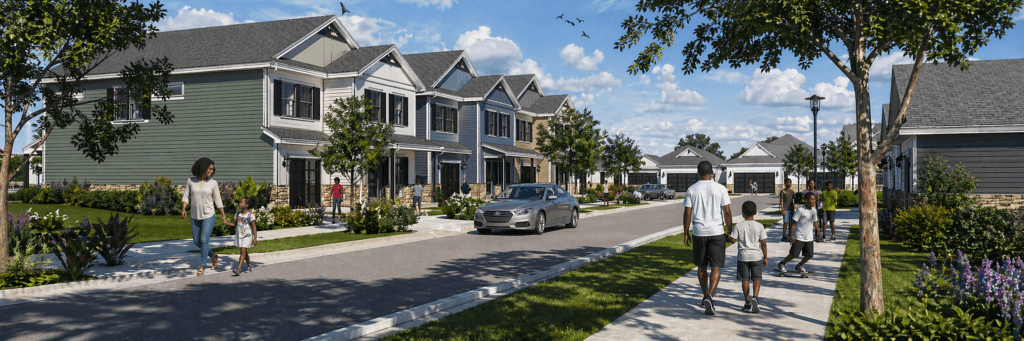
As affordability continues to challenge working families, Legacy Oaks stands as a strategic and community-centered solution. The development will introduce 23 single-family homes on a five-acre infill site, providing high-quality, affordable housing that reflects the character and scale of the surrounding neighborhood.

This milestone project demonstrates how nonprofit organizations, private developers, and community leaders can collaborate to create pathways to ownership while restoring underutilized land in urban communities.

A Different Approach to Urban Development

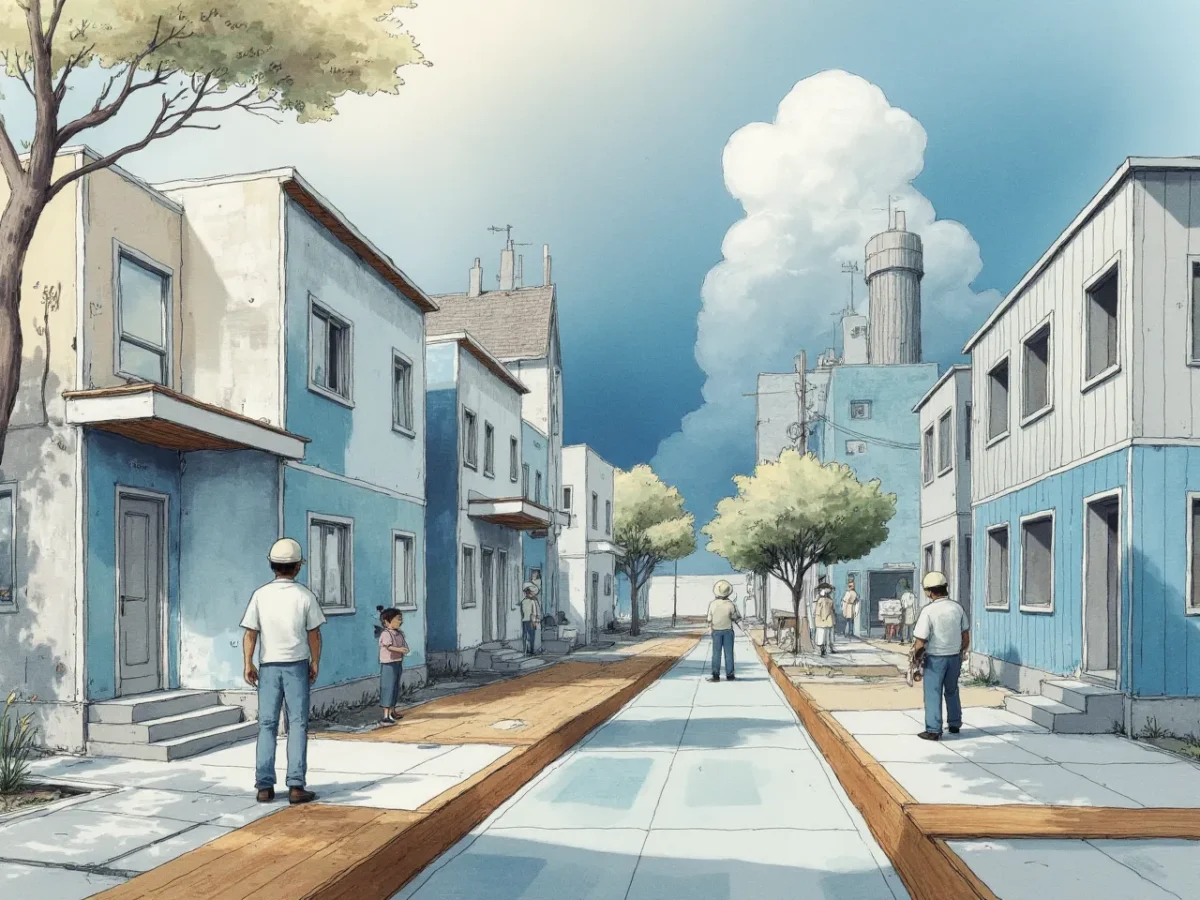
Legacy Oaks is not just another housing development. It is a model for restorative development, focused on building within existing neighborhoods rather than expanding outward. Through prioritizing infill development, Park Street Homes is helping cities like Houston maximize land use, preserve community identity, and increase access to homeownership opportunities.

Through Park Street Homes partnership with the Houston Area Urban League, the project restores community trust and engagement, while delivering development expertise and an expandable approach to building attainable housing.

How Park Street Homes Is Addressing the Housing Gap

Park Street Homes continues to lead with a model that focuses on real solutions for working families:

• Strategic Partnerships That Deliver Results – Collaborating with nonprofits, municipalities, and investors to unlock land and create housing opportunities in urban neighborhoods

• Homes Designed for Real Life – Offering thoughtfully planned residences that balance livability, quality, and affordability

• Design Without Compromise – Building homes that are durable, attractive, and consistent in quality across all price points

• A Scalable Model for Impact – Developing a repeatable framework that can be implemented in cities nationwide

The Urgency Behind Expanding Homeownership

Homeownership remains one of the most effective pathways to building long-term wealth, yet access continues to decline for many working families, particularly in urban communities.

According to the U.S. Census Bureau, the national homeownership rate is approximately 65 percent, but that number drops significantly in underserved communities and among first-time buyers. At the same time, rising home prices and interest rates have pushed affordability to some of the lowest levels seen in decades.

Housing affordability remains a growing concern nationwide. Recent data from the National

Association of Realtors shows that less than 30 percent of households can afford a median-priced home, compared to over 50 percent just a few years ago. Additionally, the United States faces a housing shortage estimated at more than 3 million homes, further limiting access for working families.

The economic impact is significant. Studies show that even a 1 percent increase in homeownership rates can generate billions in economic activity, including job creation, local spending, and increased property tax revenue. Homeownership is also closely tied to stronger communities, with higher ownership rates linked to increased neighborhood stability, improved educational outcomes, and lower crime rates.

Developments like Legacy Oaks directly address these challenges by creating attainable, for-sale housing in established neighborhoods. By expanding access to homeownership, the project supports economic mobility, strengthens communities, and helps close the wealth gap inmeaningful and measurable ways.

Legacy Oaks History and Community Impact

The foundation of Legacy Oaks is rooted in a powerful act of community stewardship. The donation of 4.9 acres by the Cameron Iron Workers and Charity Social Club reflects a long-standing mission centered on service, uplift, and collective progress. For generations, the organization has served as a pillar of cultural preservation, economic empowerment, and community support within Acres Homes and the broader Houston area.

This contribution aligns seamlessly with the Houston Area Urban League’s commitment to advancing economic self-reliance, equity, and opportunity. By entrusting HAUL with this land, the Cameron Iron Workers and Charity Social Club transformed a legacy asset into a forward-looking development focused on affordability, stability, and upward mobility.

Legacy Oaks is not simply a housing development. It is a strategic investment in generational wealth-building, community revitalization, and inclusive growth. Through access to quality housing and community-centered resources, the initiative ensures that Acres Homes residents benefit directly from neighborhood progress.

This partnership stands as a model for how legacy organizations and mission-driven institutions can collaborate to honor the past while building a more equitable future.

“Legacy Oaks at Bland Street represents the kind of intentional investment our communities deserve. This development is about more than building homes; it’s about creating pathways to generational wealth, strengthening neighborhoods, and ensuring that long-time residents have access to the opportunities taking shape around them. At the Houston Area Urban League, we understand that homeownership is one of the most powerful tools for economic mobility. Legacy Oaks is a meaningful step toward closing the wealth gap by making quality, affordable housing accessible to working families right here in Acres Homes.”

— Judson Robinson, President & CEO, Houston Area Urban League

A Mission Rooted in Community

Park Street Homes was founded on the belief that affordability and quality should go hand in hand. With a focus on restoring opportunity in underserved communities, the company continues to build a national platform centered on equitable development and long-term impact.

“Park Street Homes was founded on the belief that homeownership should be accessible to more families, particularly in the urban communities that have historically been underserved. Through partnerships with organizations like the Houston Area Urban League, cities, and mission-aligned investors, we are building a national platform focused on restoring neighborhoods and expanding opportunity through homeownership.”

About the Houston Area Urban League

Founded in 1968, the Houston Area Urban League (HAUL) is a nonprofit, community-based organization dedicated to empowering African Americans and underserved communities to achieve economic self-reliance, parity, power, and civil rights. As an affiliate of the National Urban League, HAUL provides direct services and advocacy across Greater Houston through programs focused on workforce development, education and youth services, financial empowerment, housing, small business support, and health equity. Through strategic partnerships with corporations, foundations, government agencies, faith-based institutions, and community organizations, HAUL delivers impactful, results-driven programs designed to strengthen families, build sustainable careers, and promote economic mobility.

About Park Street Homes

Park Street Homes is a mission-driven homebuilder focused on delivering affordable and entry-level housing in America’s urban core. By working at the intersection of nonprofits, cities, and private capital, the company creates high-quality housing that expands access to homeownership while revitalizing communities.

For media inquiries, or to schedule an interview with Kevan and Ayesha Shelton are available for both in-person and Zoom interviews—please contact Innovating Marketing Group at info@innovatingmarketinggroup.com or call 346-980-9062.

Original article published by Houston Style Magazine on May 19, 2026, at 6:20 a.m.

Houston Builder and Nonprofit Deliver 23 Affordable Homes Using Donated Land Instead of Government Subsidies

A new project in Houston’s Acres Homes neighborhood shows how private builders and nonprofits can deliver affordable housing without government subsidies. Kevan Shelton, co-founder and CEO of Park Street Homes, led the effort in partnership with the Houston Area Urban League, delivering 23 affordable homes and a community center through a deal structure that requires no government subsidy. The project centers on a land donation from a labor union to the nonprofit, which then partnered with Park Street Homes to develop the site and sell homes to income-qualified buyers.

By eliminating land acquisition costs, the builder can offer homes at lower prices while still covering construction and financing expenses.

How a Land Donation Made 23 Affordable Houston Homes Possible

The project began when the Kirby Ironworkers’ Union donated five acres to the Houston Area Urban League, with the stipulation that the land be used for affordable housing. The Urban League, lacking in-house development capacity, brought in Park Street Homes to handle planning, development, and construction.

Park Street Homes worked with the Urban League to design a site plan that fit 23 homes and a community center, which the nonprofit will operate. Acting as developer and general contractor, Park Street Homes managed the entitlement process, installed infrastructure, and constructed the homes. Once finished, the homes will be sold to buyers who meet income guidelines, while the Urban League provides homebuyer education and support.

Shelton describes the arrangement as a model where the nonprofit provides mission alignment and community trust, and the builder supplies technical and construction expertise. The absence of a government subsidy streamlines the process and speeds up delivery. Without subsidy requirements, the project bypasses the lengthy compliance and approval procedures associated with Low-Income Housing Tax Credits, HOME funds, and other public programs.

Park Street Homes pursues both affordable and market-rate projects, which helps balance cash flow. Income from higher-margin custom homes supports the longer timelines and thinner margins of affordable developments, allowing the company to maintain scale and consistency across its operations.

How Houston Buyers Qualify for Homes Priced in the Low-to-Mid $200,000s

Even without government subsidies for development, Park Street Homes focuses on making homeownership accessible to buyers. The company works with lenders that participate in down payment assistance programs and offer credits to reduce closing costs and lower interest rates. In some cases, Park Street Homes covers closing costs or offers rate buydowns to help buyers qualify.

Shelton explains that the company keeps homes as affordable as possible through design efficiency and careful partner selection for buyer financing. In Houston, Park Street Homes combines city-provided down payment assistance of up to $120,000 with lender credits and builder incentives, with some buyers achieving monthly mortgage payments as low as $900. These results depend on the availability of municipal homebuyer assistance, which can vary widely by city and may be subject to funding limits.

Delivering homes in the low-to-mid $200,000 range in urban Houston is also made possible by design and engineering choices that cut costs without sacrificing quality. Shelton emphasizes design efficiency, using compact floor plans, value-engineered structural systems, and carefully chosen finishes to deliver visual appeal at a lower price point.

Where This Model Works and Where It Falls Short

The nonprofit-private model used in Acres Homes relies on critical factors that are not always present in other markets. Most importantly, the model requires access to donated or below-market land, which allows the builder to reduce total development costs and offer lower sale prices. In areas where nonprofits do not control land or where land is expensive, this approach may not work unless public subsidy or land banking is available.

The model also depends on a nonprofit willing to partner throughout the project, rather than simply selling land to a developer. In this case, the Urban League remains involved by operating the community center and providing homebuyer services. That ongoing participation ensures the partnership aligns with the nonprofit’s mission and adds value beyond the housing units alone.

Shelton believes the model can be replicated in other cities with similar conditions, especially where community development corporations, land trusts, or anchor institutions such as hospitals or universities control land and support affordable housing. He points to Park Street Homes’ expansion into Birmingham, Alabama, as an example of building relationships with nonprofits and community organizations that control land or have access to it.

“Our goal is to be the first choice as a partner, not just as a developer and general contractor, but as a true partner to the community,” Shelton says.

What This Approach Means for Affordable Housing in Other Cities

The Acres Homes project demonstrates one viable path for producing workforce housing outside traditional subsidy programs. This approach will not replace traditional affordable housing financing, which remains essential in high-cost markets and for the lowest-income households. Rather, it offers an additional pathway to producing workforce housing by allowing land to be donated, banked, or accessed through community organizations.

For nonprofits, this model allows them to advance their affordable housing missions without taking on the operational challenges of becoming developers themselves. For builders, it provides access to land and community trust that are often difficult to secure in urban infill areas.

The ability to replicate this strategy depends on the availability of donated land and on nonprofits and builders willing to form long-term, mission-aligned partnerships. In cities where these elements come together, the model offers a pathway to increase the supply of affordable homes with fewer bureaucratic hurdles and faster timelines.

The Challenge of Scaling This Model Beyond Houston

The Acres Homes project offers a replicable path to expand affordable housing in urban markets, but only when key ingredients are present. As land donations and nonprofit partnerships become more common, this model could help fill gaps in workforce housing without waiting for public funding cycles or navigating complex subsidy programs.

Park Street Homes’ experience shows that with the right partners, efficient design, and creative financing, private builders and nonprofits can deliver affordable homes without waiting for public funding. The challenge will be finding enough opportunities where land, mission, and capacity align. Where they do, this approach could become a reliable tool for addressing housing needs for working families in cities like Houston and beyond.

Originally published on KeyCrew.com by Rudi Davis on March 9, 2026.

Houston Area Urban League and Park Street Homes Plant Seeds of Generational Wealth with Legacy Oaks Groundbreaking in Acres Homes

On Juneteenth, a day when Houston does more than remember freedom—it recommits to finishing freedom’s work—the Houston Area Urban League and Park Street Homes turned soil, lifted hope, and launched a new chapter for homeownership in historic Acres Homes.

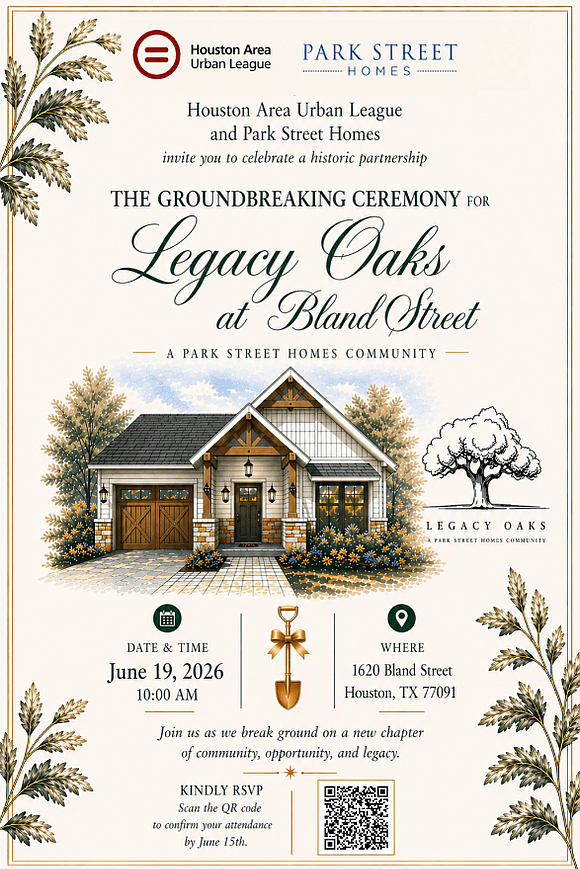
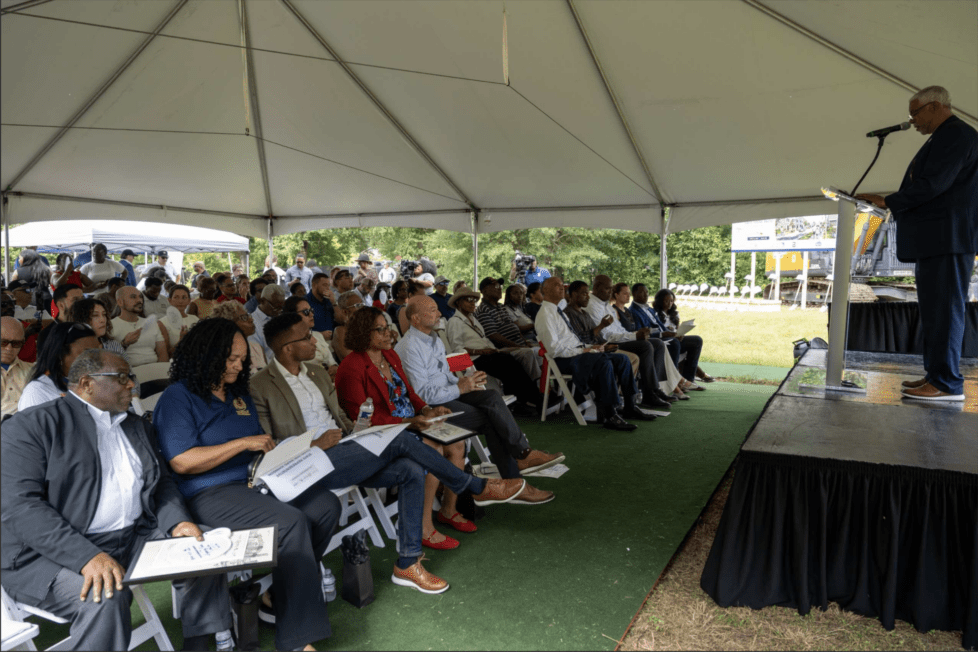
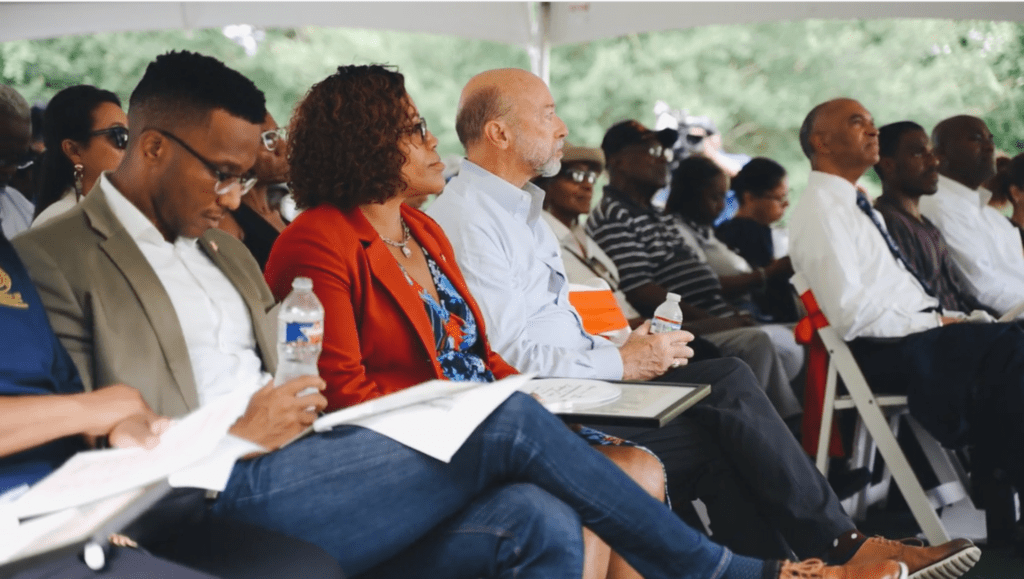
The successful groundbreaking of Legacy Oaks at Bland Street brought more than 130 leaders, residents and partners together on Juneteenth to launch a 23-home development at Bland Street, a community-centered project designed to expand affordable homeownership, strengthen neighborhood roots, and create new pathways to generational wealth for Houston families.

The June 19, 2026 ceremony gathered elected officials, community leaders, corporate partners, residents, and stakeholders around a shared vision: ensuring that families in historically underserved neighborhoods can participate in Houston’s growth without being priced out of the communities they helped build.

Legacy Oaks at Bland Street will feature 23 single-family homes on nearly five acres of land donated by the Cameron Iron Workers and Charity Social Club, transforming a treasured community asset into a lasting investment for future generations. In a city where development too often means displacement, Legacy Oaks carries a different message: progress can have a front porch, a family room, and a deed with a name on it.

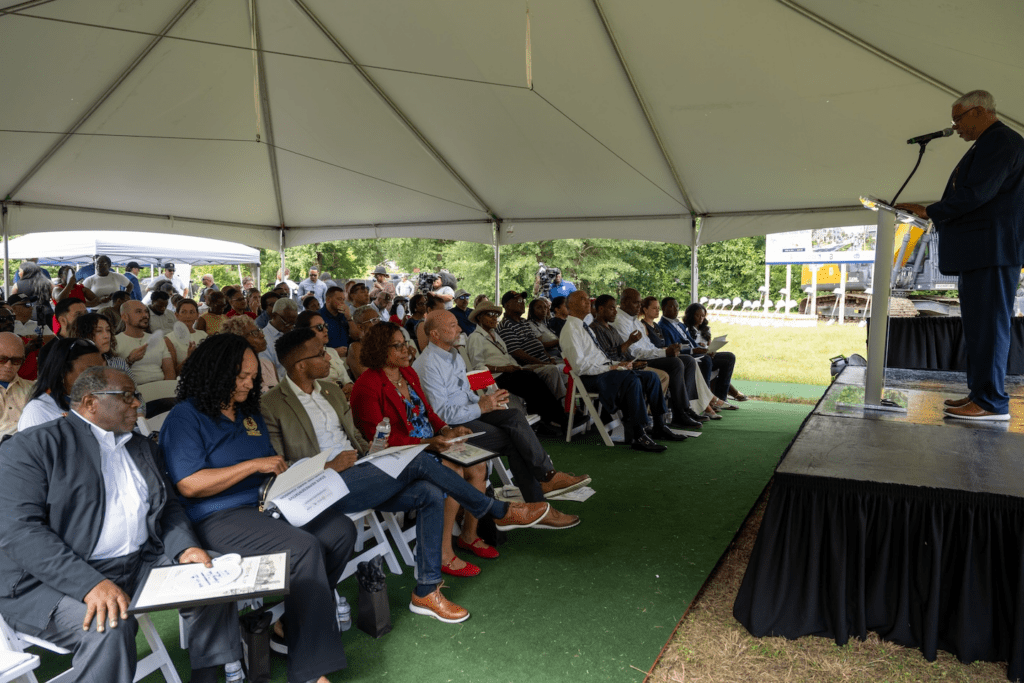
The program opened with welcome remarks from Judson W. Robinson III, President and CEO of the Houston Area Urban League, who connected the meaning of Juneteenth to the economic power of ownership.

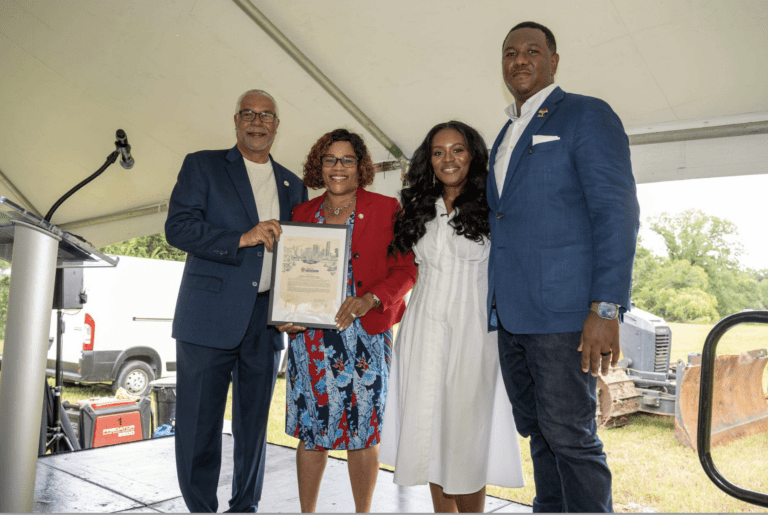
Judson Robinson HAUL Council Member Tarsha Jackson Ayesha and Kevan | Twice Media Productions 

“As we commemorate Juneteenth, Legacy Oaks reminds us that freedom must be accompanied by opportunity,” Robinson said. “Homeownership remains one of the most effective tools for building generational wealth and strengthening communities. This development reflects our commitment to ensuring that families in Acres Homes can benefit from the growth and investment occurring in their neighborhood while preserving the community’s rich history and character.”

That message resonated deeply in Acres Homes, one of Houston’s most important African American communities, where land, faith, family, entrepreneurship, and resilience have shaped generations. Acres Homes is not simply a neighborhood; it is a living archive of Black Houston strength. And on Juneteenth, Legacy Oaks became a promise that the next chapter will include ownership, stability, and opportunity.

The ceremony featured greetings and remarks from Houston City Council Member Tarsha Jackson, a City of Houston proclamation presented by Council Member Willie DavisState Representative Charlene Ward JohnsonJames “Jim” Dow of Citizens Trust BankTrozie Jordan of United Airlines, and Kevan Shelton, CEO and Co-Founder of Park Street Homes. Congressman Christian Menefee, U.S. Representative for Texas’s 18th Congressional District, also joined community leaders in celebrating the project’s potential to expand access to homeownership in neighborhoods too often overlooked by traditional investment.

For Park Street Homes, Legacy Oaks represents both a local commitment and a larger mission.

“Park Street Homes was founded on the belief that homeownership should be accessible to more families, particularly in urban communities that have historically been underserved,” Shelton said. “Through partnerships with organizations like the Houston Area Urban League, cities, and mission-aligned investors, we are building a national platform focused on restoring neighborhoods and expanding opportunity through homeownership.”

 Houston Area Urban League and Park Street Homes Judson Robinson | Twice Media Productions

That spirit of partnership is the foundation beneath Legacy Oaks. HAUL brings decades of advocacy, housing support, financial empowerment, workforce development, and civil rights leadership. Park Street Homes brings development experience and a mission-driven approach to building quality housing in urban communities. Together, they are offering a practical response to one of Houston’s biggest challenges: how to grow without leaving working families behind.

Legacy Oaks arrives as Houston continues to face serious housing affordability challenges, especially for first-time and moderate-income buyers. For too many families, the dream of homeownership has been pushed further away by rising prices, limited inventory, and economic barriers. This project is designed to help close that gap with attainable, quality homes that honor the character of Acres Homes rather than erase it.

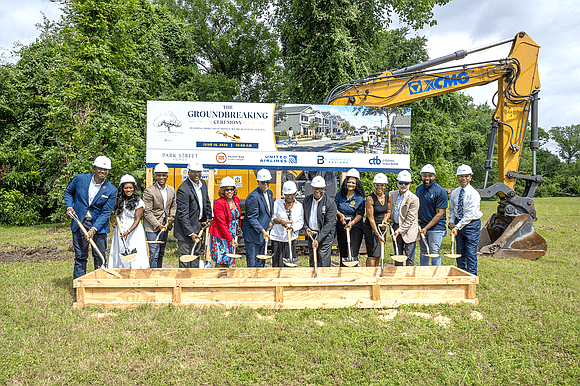
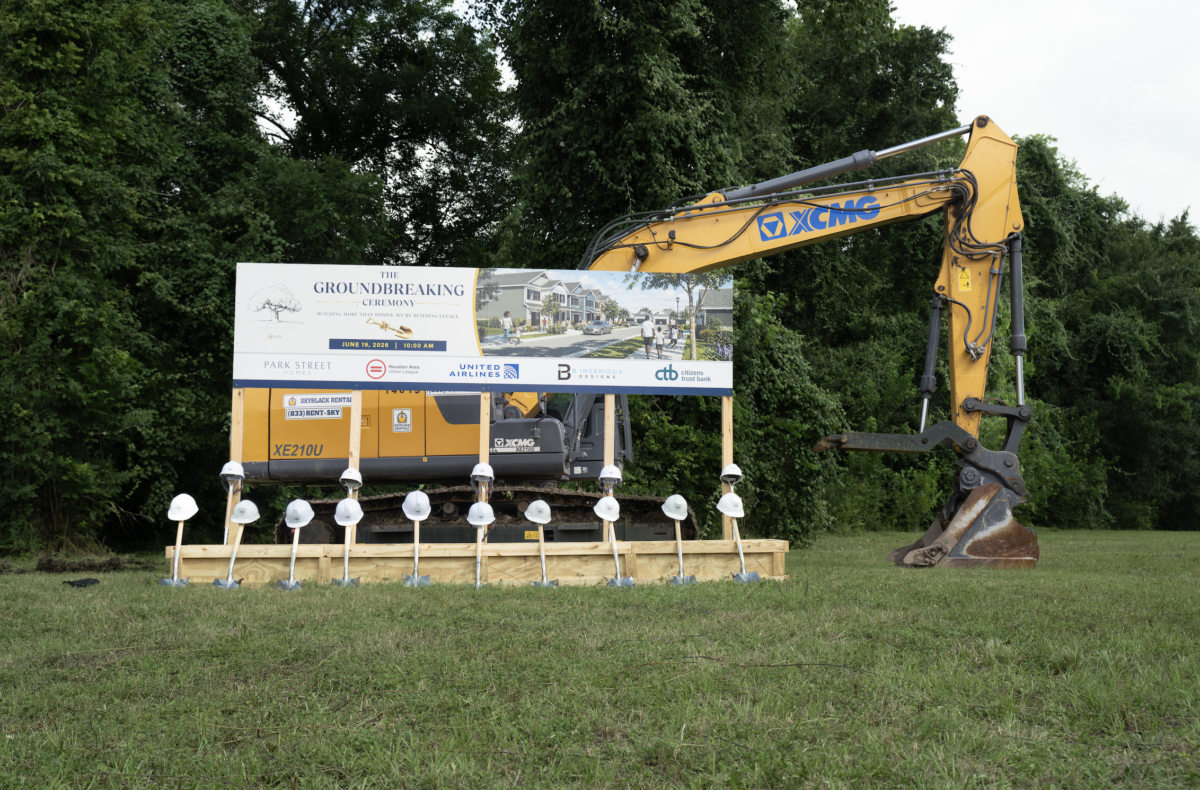
The groundbreaking concluded with the ceremonial turning of soil and a photo opportunity featuring project partners, elected officials, and community stakeholders. But the real picture was bigger than the moment. It was a snapshot of what happens when community vision meets institutional commitment.

Legacy Oaks at Bland Street is not just a housing development. It is a declaration that freedom needs foundation, opportunity needs access, and generational wealth must be built where legacy already lives.

In Acres Homes, 23 new front doors will soon open. Behind them may be the next chapter of Houston families building equity, stability, and a future worthy of Juneteenth.

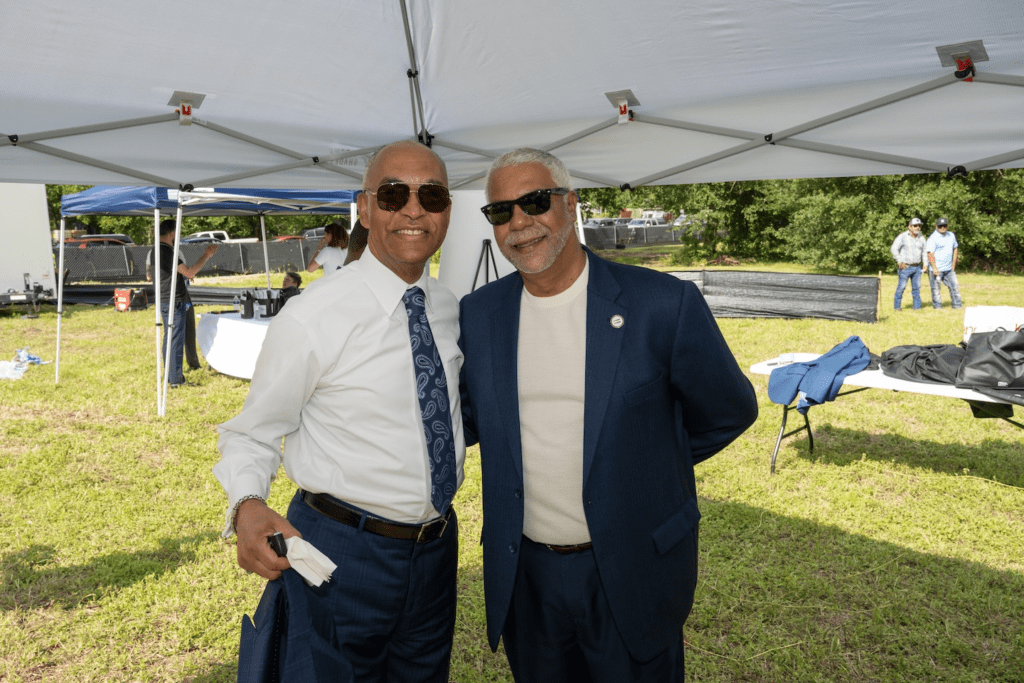
Eric Goodie EVP HAUL and Judson Robison President and CEO HAUL

Article originally published by Houston Style Magazine Staff | 6/23/2026, 12:57 p.m.

Houston Area Urban League celebrates Juneteenth by advancing home ownership in Acres Homes area

On Juneteenth, more than 130 community leaders, residents, elected officials and partners gathered in Houston’s historic Acres Homes neighborhood to celebrate the groundbreaking of Legacy Oaks at Bland Street, a new homeownership development led by the Houston Area Urban League in partnership with Park Street Homes.

The project marks a major step toward expanding access to affordable homeownership in one of Houston’s legacy communities. Legacy Oaks at Bland Street will bring 23 single-family homes to nearly five acres of land donated by the Cameron Iron Workers and Charity Social Club, transforming a long-held community asset into a residential development designed to support families, strengthen the neighborhood and create new pathways to generational wealth.

For the Houston Area Urban League, the timing of the groundbreaking carried special meaning. Held on June 19, the ceremony connected the promise of freedom with the continued work of building economic opportunity.

“As we commemorate Juneteenth, Legacy Oaks reminds us that freedom must be accompanied by opportunity,” said Judson W. Robinson III, President and CEO of the Houston Area Urban League. “Homeownership remains one of the most effective tools for building generational wealth and strengthening communities. This development reflects our commitment to ensuring that families in Acres Homes can benefit from the growth and investment occurring in their neighborhood while preserving the community’s rich history and character.”

The ceremony opened with remarks from Robinson and included greetings from Houston City Council Member Tarsha Jackson. Council Member Willie Davis presented a City of Houston proclamation, and additional remarks were shared by State Representative Charlene Ward Johnson, James “Jim” Dow of Citizens Trust Bank, Trozie Jordan of United Airlines and Kevan Shelton, CEO and Co-Founder of Park Street Homes.

Congressman Christian Menefee, U.S. Representative for Texas’s 18th Congressional District, also addressed attendees, joining local leaders in recognizing the role that homeownership and community investment can play in historically underserved neighborhoods.

Legacy Oaks arrives as many Houston families continue to face rising housing costs and limited options for attainable homeownership. The development is designed to help close that gap by creating quality housing opportunities for first-time and moderate-income buyers while honoring the history and character of Acres Homes.

For Park Street Homes, the project reflects a broader mission to make homeownership more accessible in urban communities.

“Park Street Homes was founded on the belief that homeownership should be accessible to more families, particularly in urban communities that have historically been underserved,” Shelton said. “Through partnerships with organizations like the Houston Area Urban League, cities, and mission-aligned investors, we are building a national platform focused on restoring neighborhoods and expanding opportunity through homeownership.”

The event concluded with a ceremonial groundbreaking and photos featuring elected officials, project partners, community stakeholders and residents. For many in attendance, the moment represented more than the launch of a housing development. It reflected a continued investment in Acres Homes and a commitment to ensuring that growth in Houston includes the families and communities that have long shaped the city.

Legacy Oaks at Bland Street is a collaborative effort between the Houston Area Urban League, Park Street Homes, community partners and local stakeholders. Once completed, the development will add 23 affordable single-family homes to the neighborhood and further the Houston Area Urban League’s work to expand economic mobility, housing access and community empowerment across Greater Houston.

Founded in 1968, the Houston Area Urban League is a nonprofit, community-based organization and affiliate of the National Urban League. The organization provides direct services and advocacy across Greater Houston through programs focused on workforce development, education and youth services, financial empowerment, housing, small business support and health equity.

Article Originally Published on The Bayou Beat by Charlet Dudley June 25, 2026

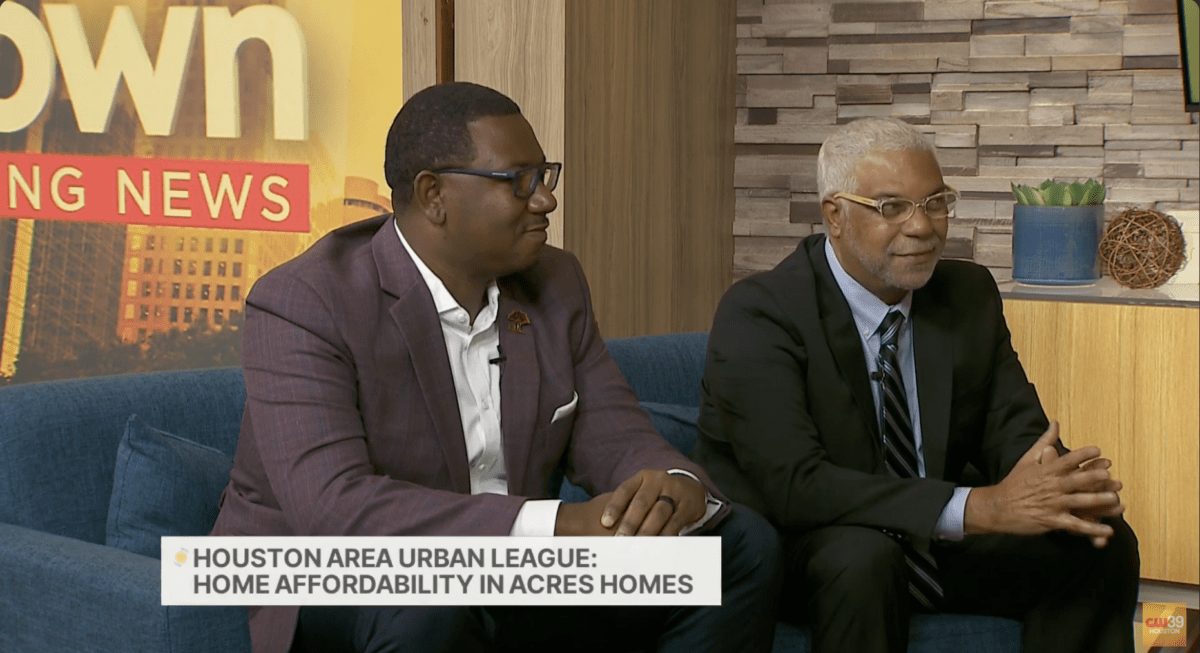
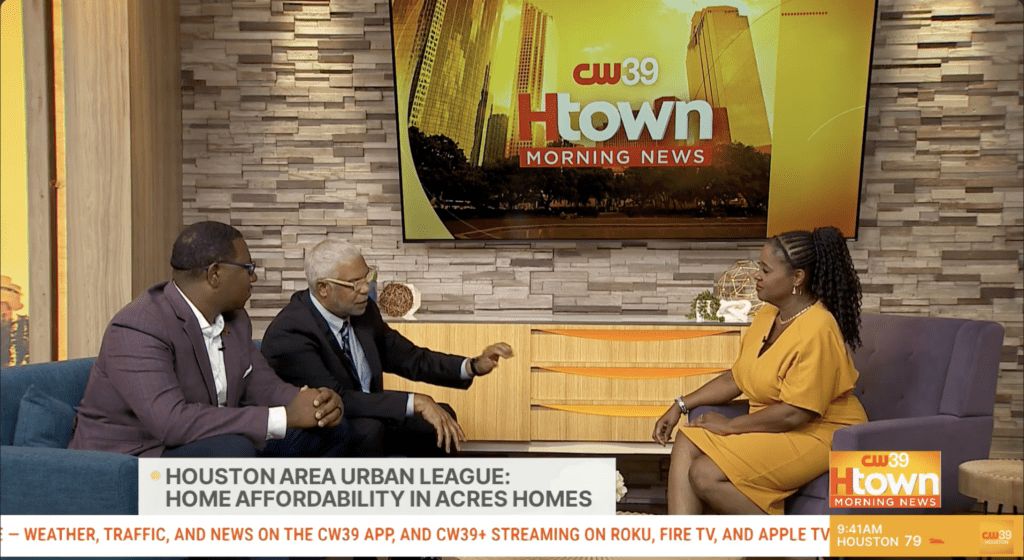
Home Affordability in Acres Homes with Houston Area Urban League

Legacy Oaks: Building More Than Homes—Creating Pathways to Homeownership in Houston

For many Houston families, the dream of owning a home feels more out of reach than ever. Rising home prices, limited inventory, and increasing costs have made affordable homeownership a challenge. But in Houston’s historic Acres Homes neighborhood, a new community is proving that affordable housing can still be thoughtfully designed, beautifully built, and centered around opportunity.

Legacy Oaks, Park Street Homes’ newest residential community, is doing exactly that.

A Community Designed for Opportunity

Located on a five-acre site in Acres Homes, Legacy Oaks will feature 23 new single-family homes with prices starting in the mid-$200,000s. More than just a new development, the community represents a partnership focused on expanding access to homeownership for working families throughout Houston.

Developed in collaboration with the Houston Area Urban League, Legacy Oaks combines quality new construction with education, financial resources, and long-term support for first-time homebuyers.

CLICK TO WATCH THE FULL INTERVIEW

More Than Building Homes

For the Houston Area Urban League, Legacy Oaks is the next step in a mission that goes far beyond construction.

For years, the organization has helped families navigate every stage of the homeownership journey—from first-time buyer education and financial counseling to foreclosure prevention and post-purchase support. Legacy Oaks allows those services to come full circle by providing affordable homes that many families can realistically purchase.

The goal isn’t simply to help someone buy a house—it’s to help them build lasting financial stability through homeownership.

Affordable Homes in a Growing Community

Acres Homes has become one of Houston’s most promising neighborhoods, offering residents convenient access to employment centers, schools, shopping, and everyday amenities while maintaining its strong sense of community.

Legacy Oaks was intentionally designed to fit within that vision by offering:

  • 23 thoughtfully designed single-family homes
  • Modern floor plans with quality finishes
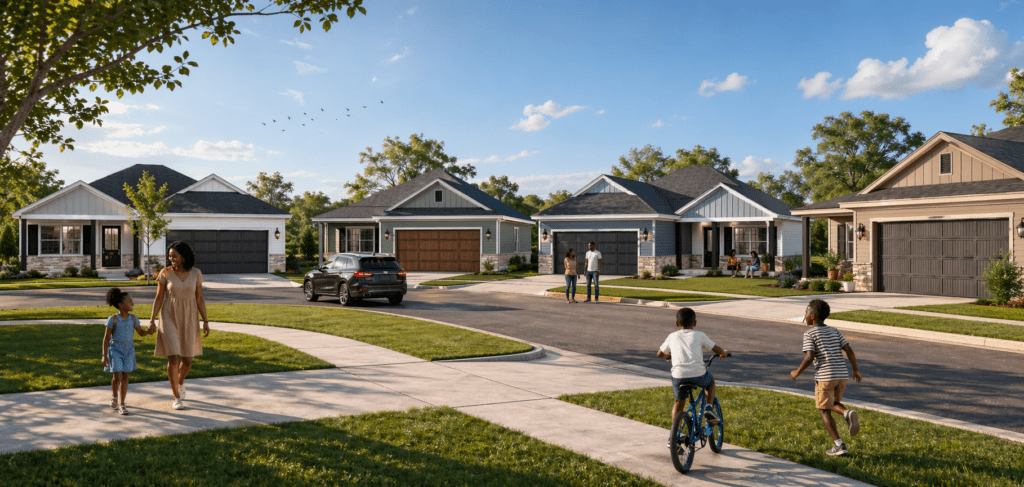
  • Beautiful streetscapes and neighborhood green spaces
  • Homes starting in the mid-$200,000s
  • Convenient access to schools, grocery stores, and major employment centers

Making Homeownership Possible

One of the biggest obstacles for many first-time buyers isn’t the monthly mortgage—it’s the upfront costs.

That’s why many Legacy Oaks buyers may qualify for Down Payment Assistance through the City of Houston and other homebuyer assistance programs.

Combined with homebuyer education and financial counseling, these resources can dramatically reduce the barriers to purchasing a home. In some cases, qualified buyers may be eligible for substantial assistance programs that help make homeownership more attainable.

Building Generational Wealth

Homeownership has long been one of the strongest ways families build financial security and create opportunities for future generations.

Legacy Oaks was created with that purpose in mind.

Rather than simply adding new housing inventory, the community provides an opportunity for families to establish roots, build equity, and invest in their future while remaining connected to the neighborhoods they love.

It’s about creating neighborhoods where children grow up seeing homeownership as something achievable—and where families can pass that opportunity on for generations.

A Partnership Built Around Community

Park Street Homes believes development should strengthen existing neighborhoods rather than replace them.

Through partnerships with organizations like the Houston Area Urban League, the goal is to create communities that respect local history while expanding access to quality, affordable housing.

Legacy Oaks represents a new model of development—one where private builders, nonprofit organizations, and community leaders work together to create lasting impact.

Your Opportunity Starts Here

Construction is underway, with the first homes expected to become available soon.

If you’re considering purchasing your first home, now is the time to begin the process. Early registration allows prospective buyers to learn about available floor plans, qualification requirements, down payment assistance programs, and upcoming home releases.

Legacy Oaks isn’t just building homes—it’s building futures.

Learn more about Legacy Oaks and begin your homeownership journey today.

Interview Originally Published by CW39 – Houston Jul 15 / 2026 at 10:49 AM CDT

Building Legacy: The Legacy Oaks Groundbreaking Ceremony

On the morning of June 19, 2026, something powerful happened at 1620 Bland Street in Houston’s 77091 zip code. The sun was barely above the horizon when the crowd began to gather — neighbors, city leaders, community advocates, future homeowners, and partners united by a shared vision, all there to witness history being made in their own backyard. The energy was electric. The excitement, palpable. This wasn’t just a groundbreaking — it was a declaration.

A New Chapter for Houston’s Urban Core

Legacy Oaks, a new Park Street Homes community coming to life in northwest Houston, represents exactly the kind of restorative development we’ve championed since our founding 10 years ago. At its heart, this community is about more than homes. It’s about reclaiming potential, restoring pride, and reimagining what’s possible in neighborhoods that have long deserved more investment and opportunity.

For too long, communities like the one at 1620 Bland Street have been overlooked. Land sits idle. Buildings fall into disrepair. Families are forced to look elsewhere for quality housing. Legacy Oaks changes that narrative — one home at a time, one family at a time.

Partners in Purpose

None of this happens alone. The Legacy Oaks groundbreaking brought together an extraordinary coalition of partners who believe, as we do, that access to quality, affordable homeownership is a cornerstone of community health.

We were proud to stand alongside the Houston Area Urban League — a pillar of advocacy, economic empowerment, and equity in our city for decades. Their partnership is a testament to the shared belief that housing is a human right, not a luxury.

We were equally honored to have Citizens Trust Bank and United Airlines as Supporting Partners for this milestone event. Their presence speaks to a growing recognition among Houston’s business community that investing in neighborhoods is investing in the city’s future.

Together, these partnerships reflect something we know to be true: building community takes a community.

What Legacy Oaks Means

Legacy Oaks will feature 23 new homes across three thoughtfully designed floor plans, plus a new Community Center spearheaded by the Houston Area Urban League — creating a neighborhood built around opportunity, connection, and belonging.

Every detail is designed with the Park Street Homes promise in mind: thoughtful architecture, high-quality craftsmanship, and a deep respect for the people who will call these homes theirs. Like the oak tree that anchors our community’s identity, we’re building something meant to stand for generations.

What Comes Next

The shovels have broken ground. The work now begins. If you’d like to learn more about Legacy Oaks or express interest in making one of these homes yours, See Legacy Oaks for Yourself → https://www.parkstreethomes.com/legacy-oaks/

Legacy Oaks is more than an address. It’s a promise — to this neighborhood, to Houston, and to every family that deserves a place to put down roots, build wealth, and leave something behind for the people who come after them.

We broke ground on June 19th. We’re just getting started.


Park Street Homes is an award-winning homebuilder revitalizing urban neighborhoods with thoughtfully designed, high-quality homes. Founded in 2016, we’ve built a reputation for exceptional craftsmanship and a commitment to community and affordability. Renew. Build. Elevate — discover the Park Street Homes difference.

error: Content is protected !!